Free Ground Shipping on Orders Over $49 Details & Exclusions Excludes Curb Side Delivery (LTL). Lower 48 United States Only. • NEW! Shop The Fall Lookbook

Sep 1, 2026
How to Illuminate Your Desk: Lighting Ideas for Home Offices
Creating a home workspace that is both comfortable and productive is a lot like preparing a canvas for a masterpiece. Before you can add that first stroke of paint, you need to set the scene.
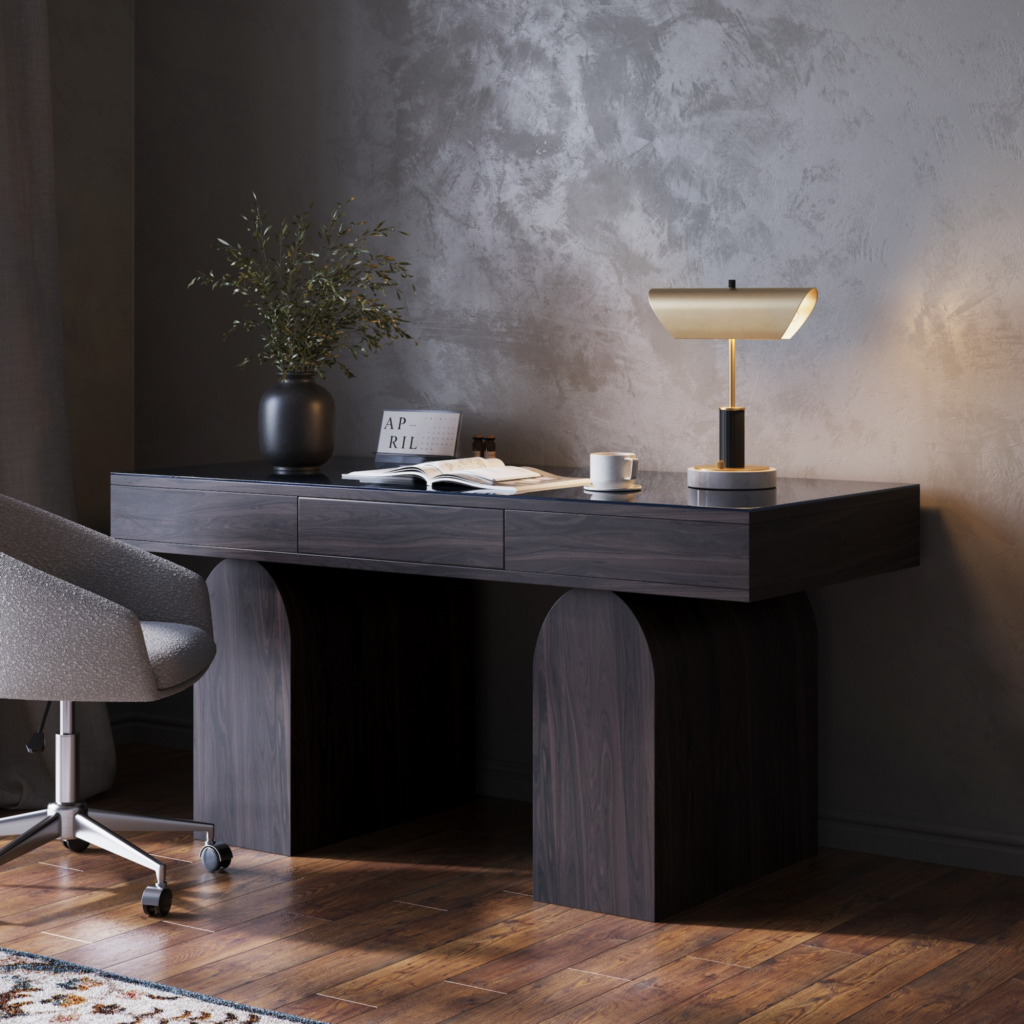
Brass Horizon 16 Inch Desk Lamp by Allure Design Haus
Putting together the perfect home office lighting setup is about so much more than eliminating shadows. It is about creating an environment that sharpens your focus, inspires creativity, and adds warmth to your daily routine.
Whether you’re writing a novel, analyzing market trends, or sketching out floor plans, how you light up your desk completely changes the way you experience your work. Think of it like an art gallery. A curator uses strategic spotlights to bring paintings to life. You can use purposeful lighting to elevate your workspace.
“Lighting will always affect how humans perform in a work environment. Consider the three layers of lighting: ambient, task, and accent to create a productive office space. Ceiling fixtures like flush mounts add an overall glow to the room, while a task lamp reduces eye strain and improves focus. Wall pendants add soft accent lighting that boosts mood and keeps the light source at eye level.” – Kaitlyn London | Design Coordinator & Visual Merchandiser for Capitol Lighting
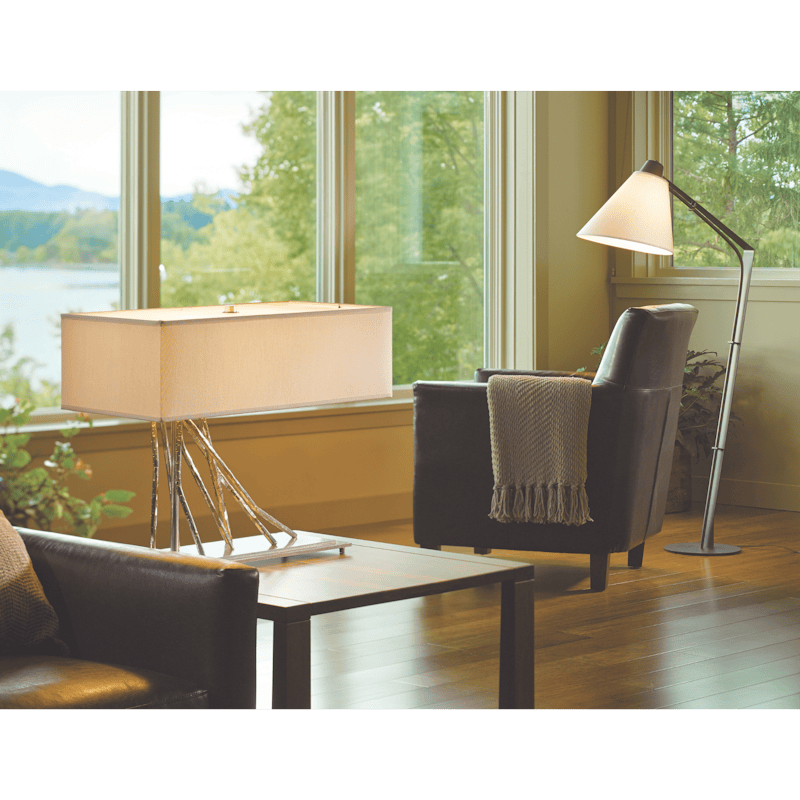
Reach Floor Lamp by Hubbardton Forge
Why Desk Lighting Matters in a Home Office
When your workspace isn’t properly lit, your eyes have to keep adjusting to the improper lighting. The result is often eye strain, tension headaches, and a loss of motivation.
The right lighting draws your attention to your to-do list while softly blurring the distractions at the edges of the room. But to get this right, you’ll need to do more than flip on the harsh overhead lights.
At its core, lighting is a totally sensory experience. It affects everything from the textures of your sofa materials to the colors on your walls. Thoughtful illumination softens the cold, hard edges of modern technology and brings out the beauty of your office furniture.
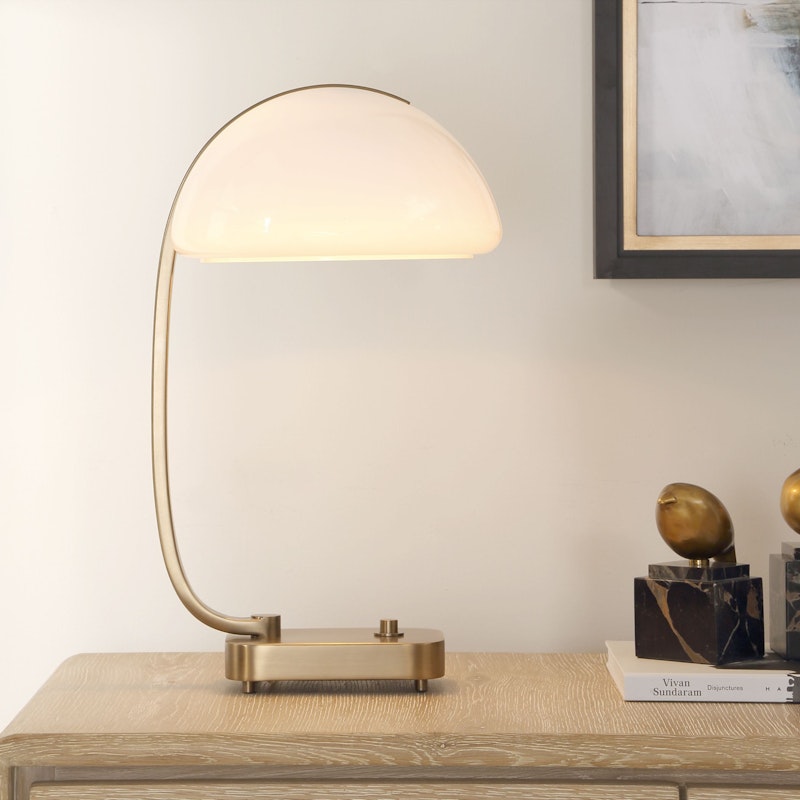
Bend The Rules 20 Inch Desk Lamp by Uttermost
Best Types of Task Lighting for Desks
When you’re shopping for task lighting for home offices, it helps to think of them as a blend of functional tools and sculptural art. The best lighting solutions mix performance and design.
The Classic Articulating Lamp
Often called an architect’s lamp, this iconic light features a spring-loaded, jointed arm that lets you pull the lamp close to your desktop for detailed work or push it away to cover more area.
The metal finish reflects a warm glow, which adds a touch of sophistication while letting you control where the light falls.
The Banker’s Lamp Reimagined
Historically, banker’s lamps are characterized by an emerald green glass shade and a brass base. Today’s updated versions feature materials like honed marble, matte-black metal, or frosted white glass.
They cast a focused, downward pool of light that points directly at your keyboard and documents while preventing that annoying glare on your computer screen.
Sculptural LED Light Bars
If you prefer a minimalistic approach, slender LED light bars offer a sleek, modern profile. Stretching horizontally across your workspace, these lights provide a wide wash of light.
They are lightweight, easy to adjust, and give you the exact amount of light that you need without cluttering up your line of sight.
Decorator’s insight: When you’re browsing desk lamp ideas, consider the dominant textures in your room. If your office is full of cold tones and sleek glass, bringing in a lamp with a soft linen shade or a warm wooden base can instantly make the space feel more comfortable.
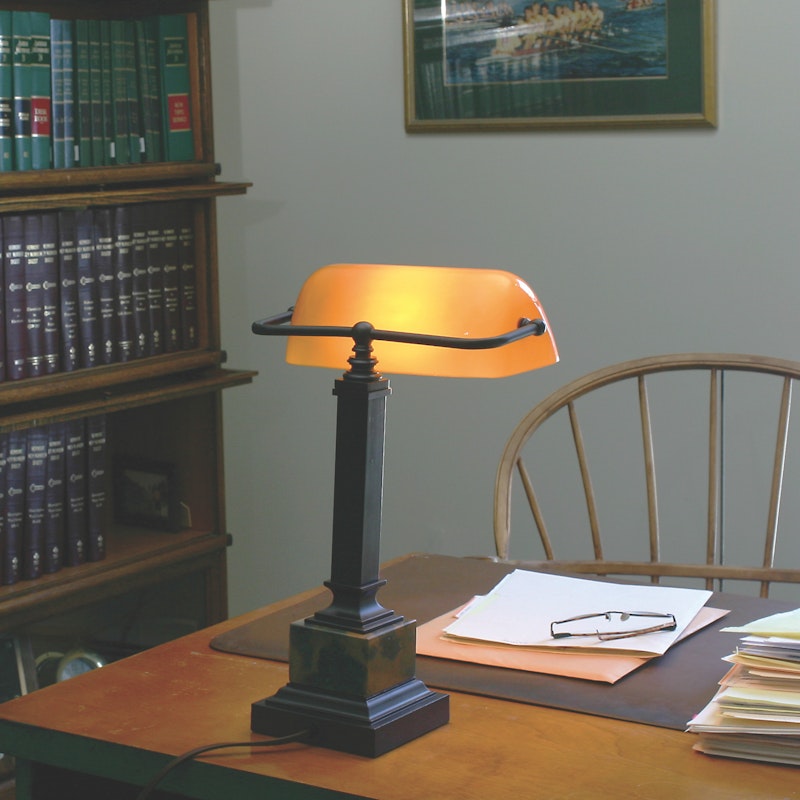
Shelburne 13 Inch Desk Lamp by House of Troy
How to Position a Desk Lamp for Better Focus
Choosing a lamp with a design you like is only part of the challenge. Where you actually place the lamp makes all the difference in how well it works. If a light is positioned awkwardly, you might end up with shadows or, even worse, a blinding glare on your computer screen. This completely defeats the purpose of having task lighting in the first place.
The Rule of Opposites
The rule of opposites helps ensure there are no shadows on your workspace. Always place your main task light on the side opposite your dominant hand. If you are right-handed, place your desk lamp on the left side of your work. As you type, write, or sketch, your hand won’t cast a distracting shadow right over what you’re trying to focus on.
Mastering Monitor Glare
Treat your computer screen like a mirror. If your desk lamp is placed so the bulb points directly at the screen, the light will bounce back into your eyes. For your comfort, angle the shade slightly downward so the light washes over your desk and falls below eye level in front of the monitor.
Flattering Light for the Digital Age
How you light up your face for a video call is just as important as how you light your desk. For a quick camera glow-up, pivot an articulating desk lamp to bounce light off a nearby wall. This technique naturally diffuses the light and softens hard shadows while creating a soft, flattering glow.
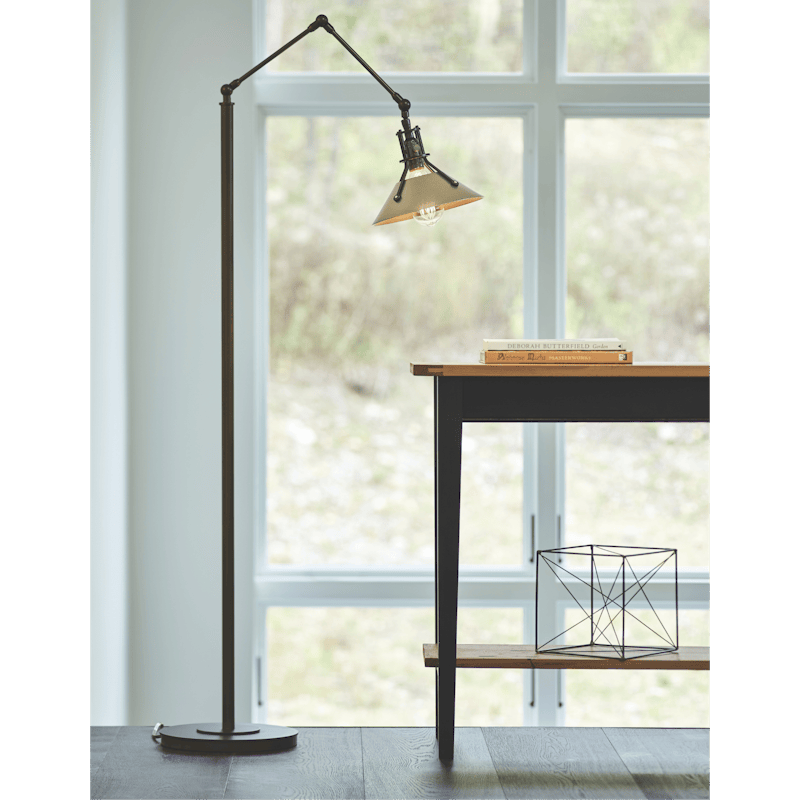
Henry 60 Inch Reading Lamp by Hubbardton Forge
Desk Lamps vs. Floor Lamps vs. Wall-Mounted Task Lights
Every home office has its own unique footprint. A sprawling executive desk in a dedicated room requires a totally different approach than a small writing bureau tucked into the corner of a guest bedroom. Fortunately, task lighting comes in all shapes and sizes to fit your needs.
Desk Lamps
The most common choice for office lighting is a desk lamp. It offers intimacy and is very easy to adjust. The downside is that a desk lamp is best suited to a larger or uncluttered desk where you can afford to sacrifice a few square inches.
Task Floor Lamps
If you have a smaller desk or you want an uncluttered work area, a task floor lamp is a good choice. Standing beside your desk, a floor lamp with adjustable reading arms will cast a pool of light directly over your workspace.
Wall-Mounted Fixtures
Wall sconces or swing-arm wall lights take up the least space. These lights mount directly to the wall, creating a high-end, boutique-like feel while keeping your desk completely clear.
| Desk Lamp | Task Floor Lamp | Wall‑Mounted Task Light | |
| Best For | Larger desk | Small or uncluttered workspace | Small or uncluttered desk; maximizing workspace |
| Adjustability | Easy to adjust | Adjustable; targeted light | Design and range vary |
| Lighting Style | Intimate; focused | Cozy; side-cast or overhead | Boutique‑like; can be directional |
| Installation | Plug‑in | Plug‑in | Either plug-in or may require installation |
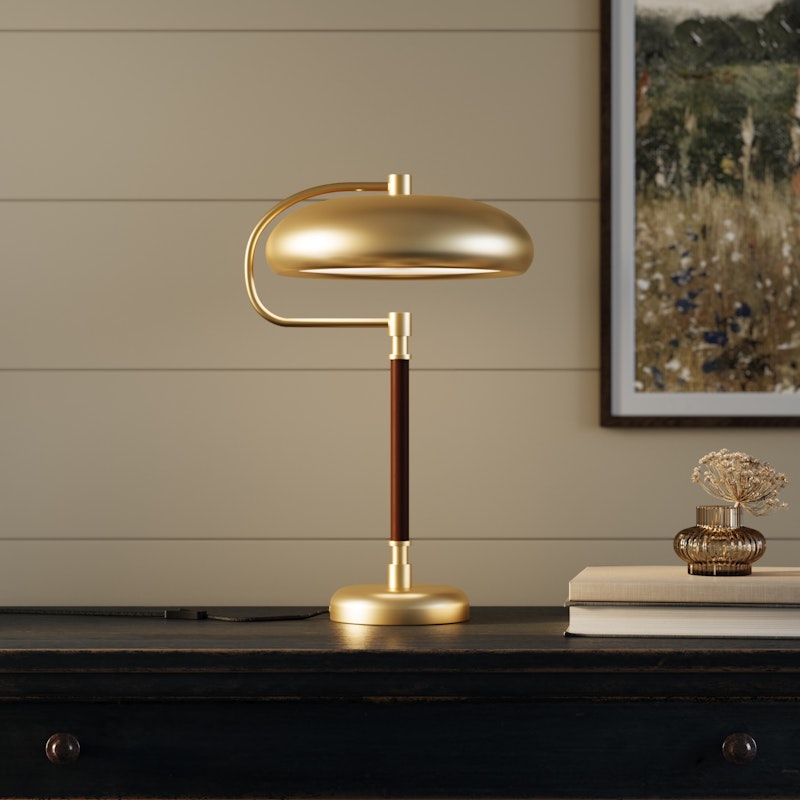
Lumina 19 Inch Desk Lamp by Allure Design Haus
How to Layer Lighting Around Your Workspace
Relying on a single light in any room is like a symphony orchestra trying to perform with only a single violin. The result is flat and one-dimensional. The secret to having a successful home office environment is layered lighting. This means combining light sources that work together.
- Ambient lighting is the foundation for your lighting setup. It comes from natural sunlight pouring through your windows, a ceiling pendant, or recessed lighting. This lighting provides the base layer of visibility, which softens any sharp contrasts in the room.
- Task lighting is focused, targeting a specific area in the room.
- Accent lighting adds texture and depth to your office. Use it to highlight a favorite piece of art or add warmth to a nearby bookshelf.
By layering these three types of lights, you’ll create a comfortable working environment. When the sun goes down and natural light fades, you can adjust your layers for better focus.
Choosing Brightness, Bulb Type, and Adjustability
Understanding the technical aspects of your lighting helps ensure your fixtures perform the way you want them to. Selecting a bulb is not just about grabbing the highest wattage but also about tuning the light to suit your needs.
Lumens
Brightness is measured in lumens and not watts. A watt is a unit of power that measures how much energy a bulb uses. For task lighting, choose a bulb that produces 400 to 800 lumens so it’s bright enough for reading fine print without causing glare.
Kelvins
A lamp’s Kelvin rating determines the mood in your room. For a warm white glow, choose a bulb between 2700 and 3000 K. This type of light is ideal for journaling and unwinding. In contrast, bulbs from 3500 K to 4000 K make you feel more alert.
Color Rendering Index
If your work involves art, design, or product reviewing, pay close attention to the color rendering index (CRI) of your lamp. It helps reveal the true colors of objects, just like natural light does. A desk lamp with at least 90 CRI is ideal; this ensures your documents are easy to read, and colors don’t look washed out.
Bring Your Workspace to Life
Layered lighting is one of the best ways to turn your office into a functional workspace. For help finding the right combination of lighting for your workspace, call one of our lighting specialists or visit a Capitol Lighting showroom near you. Expert guidance can help you compare fixture styles, understand light quality, and create an office that supports both focus and comfort.
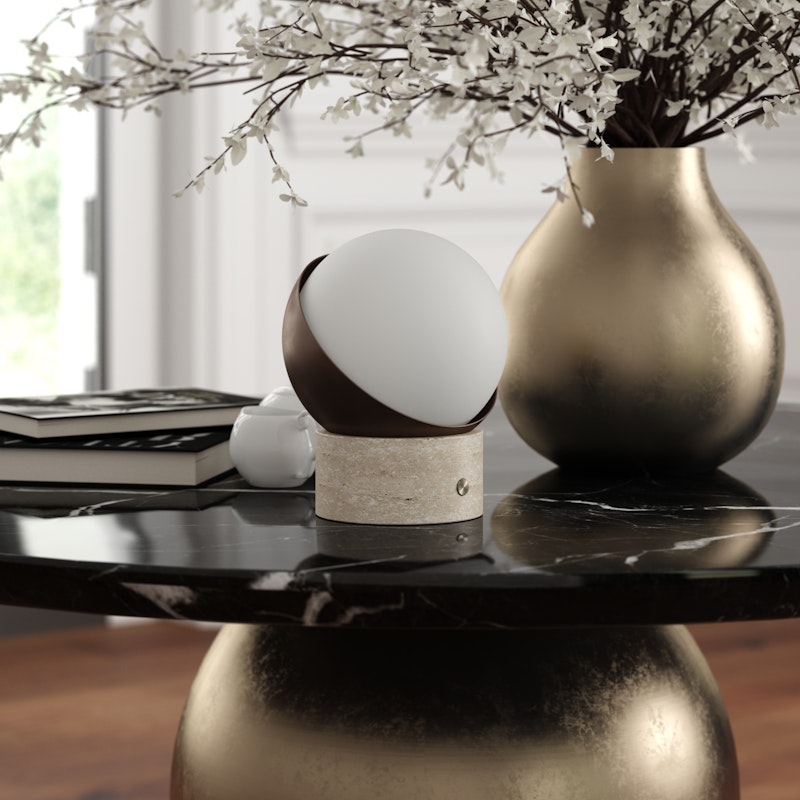
Kibun Orb 21 Inch Table Lamp by Bulbrite
Frequently Asked Questions
The following are a few commonly asked questions when adding lighting to your space.
Are LED lights good for home offices?
Yes. LED lights are energy-efficient, cool to the touch, and are the gold standard for modern task lighting.
Should a desk lamp be taller than my monitor?
Not necessarily. It depends on the lamp design and placement. If your lamp has a flexible arm, put it to the side of the monitor and redirect the light as needed. If your desk lamp sits behind your monitor, ensure the light reaches your desk surface without casting a shadow over your keyboard.
What is bias lighting?
Bias lighting involves placing a soft light behind your computer screen. It illuminates the wall behind your monitor while reducing eye fatigue.