Free Ground Shipping on Orders Over $49 Details & Exclusions Excludes Curb Side Delivery (LTL). Lower 48 United States Only. • NEW! Shop The Fall Lookbook

Feb 6, 2026
How To Read a Lighting Specification Sheet: A Guide for Homeowners

Hinkley Lighting Ibiza 16 Inch Bath Vanity Light
The lighting in your home is a crucial design element that sets the mood, defines your space, and enhances textures and colors — all while creating functionality. When strategically placed, lighting can highlight home features and make spaces feel larger or cozier.
When you put thought into your lighting, it impacts how your home looks, feels, and functions. The lights you choose can bring all other design choices to life, which is why lighting specifications are so vital to any design plan.
Whether you’re concerned with a product’s safety certification, voltage, dimming compatibility, lumens, or color temperature, you’ll want to know how to read and understand a lighting specification sheet.
What Is a Lighting Specification Sheet?
A lighting specification sheet — or spec sheet — is a document that details the characteristics and logistics for a lighting product or system. For example, the sheet below provides insight into a product’s electrical specs (wattage, voltage, etc.), physical details (dimensions, materials, weight, etc.), performance (rated lifespan, certifications, etc.), and more.
The purpose of this spec sheet is to provide you with all relevant information to make informed decisions about the lighting in your home. You can work alongside your architect or designer to quickly and accurately compare products.
Whether you’re seeking vintage, sustainable, or other trending lighting options, reviewing the specs of the lighting products and systems you choose will help bring your vision to life.
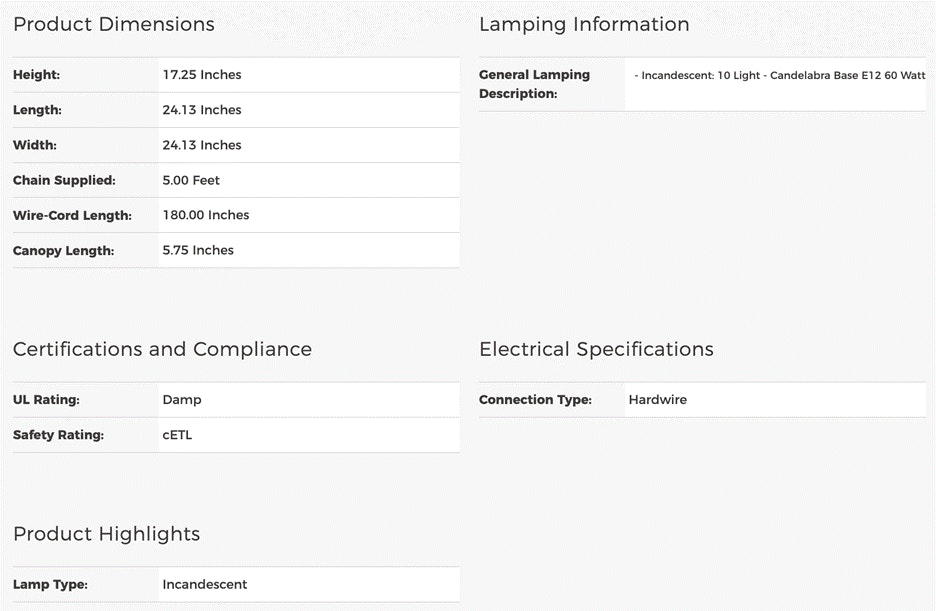
Here is an example of easy-to-read, accessible lighting specs for the Chapman & Myers Arden 24 Inch 10 Light Chandelier. Manufacturers and brands also often provide additional details.
Key Terms To Know
As a design-savvy homeowner, you’ll want to know some key terms so you can make the best decision based on light output, quality, and electrical compatibility.
Here are some top terms you’ll want to know to ensure your specific lighting needs are met.
| Lighting term | What it means | Why it matters |
| Lumens | The total amount of light produced, acting as a metric for overall brightness potential. | Selecting lighting with the desired lumens matters for more precise control over ambiance, function, and visual comfort. Planning for this ensures spaces are not too dim or harsh. Lumens will influence planning and placement when creating an experience or setting a mood. |
| Correlated color temperature (CCT) | A measurement of the color appearance of the light itself (represented in degrees Kelvin (K)). | CCT determines a light’s warmth or coolness, influencing a space’s functionality, mood, or even human behavior. For example, a cool CCT can improve alertness, whereas a warm CTT can increase relaxation. This metric is powerful when aiming to influence atmosphere and user experience. |
| Color rendering index (CRI) | A scale from 0 to 100 that measures how accurately a light source reveals the true colors of objects in comparison to natural daylight. | CRI is important because it dictates how accurately colors are revealed, which matters for materials, textures, finishes, skin tones, etc. Planning ahead can help you create more accurate, appealing, and functional spaces. A CRI of 80+ is typically desirable when aiming for true-to-life color representation. |
| Voltage (V) | The required electrical potential for a fixture to operate — for example, 120V vs. 240V. | Taking voltage into consideration matters when designing for optimal lighting in terms of product compatibility, safety and compliance considerations, efficiency, and the physical design’s product sizing and spacing. |
| Wattage (W) | The amount of power a lighting fixture or system consumes. Higher wattage doesn’t necessarily mean a brighter light. | Wattage matters to designers for safety, energy efficiency, and functional performance. Since wattage dictates power consumption, it matters for the entire design in terms of electrical load, cost, and performance. |
| Life hours (L70) | The estimated operational lifespan where the light output decreases to 70% of its initial level. | If you’re selecting lighting for hard-to-reach places, this metric is especially important, as it determines light fixture longevity. It can help you better understand your initial investment and guide material selection (for example, addressing better heat management to increase lifespan). |
| IP rating (ingress protection) | A two-digit code indicating the degree of protection against dust and water. The first digit is for solids (dust, direct, etc.) and the second is for liquids. | This code is something to consider when choosing the right lighting for its intended environment. For example, you’ll need to match lighting to real-world conditions, such as fixtures for outdoors or your bathroom. |
What You’ll Typically See on a Spec Sheet
Spec sheets will differ from one product to the next and across brands. However, all spec sheets provide a combination of detailed technical, physical, and electrical data. The goal of these spec sheets is to provide the information needed for a specific lighting design and installation application.
You’ll want to ensure the product or system you choose meets safety and performance standards while contributing to your design requirements.
You will find a combination of the following.
Performance and Optical Specs
- Lumens
- Lumens per watt (important for optimal efficiency)
- Color temperature (CCT)
- Color rendering index (CRI)
- Beam angle/light distribution
- Lumen maintenance/lifespan
Electrical and Physical Specs
- Wattage
- Voltage
- Energy efficiency
- Operating/working voltage
- Power factor
- Dimensions and weight
- Installation and mounting method
Certifications and Warranty Information
- IP rating
- Operating temperature
- Certifications, such as Energy Star
- Warranty details
What Spec Sheets Don’t Tell You
When planning your next lighting project, consider what most lighting spec sheets do not include.
For example, when looking at L70 data on spec sheets, you may not be seeing the full story. Most manufacturers show data at the TM21 25ºC level. While this may be accurate if you install high bay lighting in a climate-controlled environment, it may not be the case in real life. In other words, you may only see the expected heat performance at ideal temperatures.
Another variable is actual brightness, based on lumens vs. perceived brightness. Consider the design of your layout and the fixture. For example, a light with high lumens and a narrow beam may appear brighter in a specific spot compared to a floor light with the same lumen count. Think about how that light will be distributed.
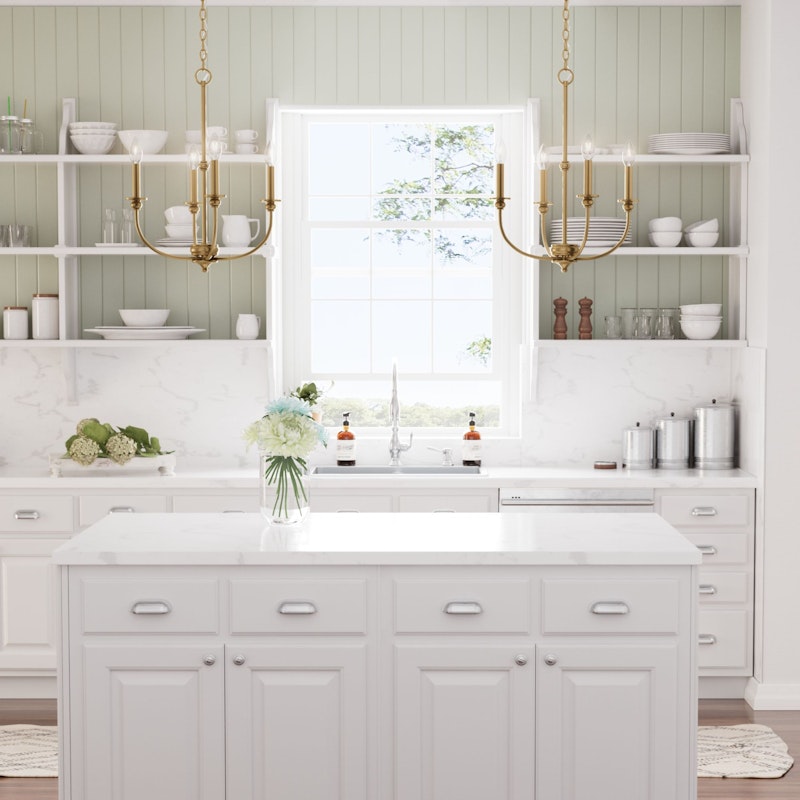
Southcrest 18 Inch Mini Chandelier by Hunter Fan
Checklist for Evaluating a Lighting Spec Sheet
What you want from a lighting spec sheet will depend on several variables. However, regardless of the project objectives, one thing is certain: a clear, accurate lighting specification sheet will help you control costs and meet expectations.
The following checklist will guide you on your next lighting project. Whether your goal is to add mood-enhancing, ambient lighting throughout your home or to create dramatic focal points in select rooms, this list will help you cover all the bases.
- Your objectives: What is the intended use of the lighting you’re seeking? The answer to this question will determine the type of lighting you’ll need in terms of color temperature, luminous power, energy performance, savings, etc. Your spec sheet should help you determine the best options.
- Lighting standards: Review your lighting spec sheet to determine luminaire standards (color rendering (CRI), illuminance levels, visual comfort, glare control (UGR), etc.)
- Electrical/installation considerations: Depending on the scope of the project, you may need to consider ceiling height, dimmer integration, etc., all of which will determine the technical compatibility of the installed luminaires. Use lighting specification sheets for clarification.
It’s best to personalize checklists based on your project requirements. Make a list that considers all metrics related to performance and light quality, physical specs, certifications, and electrical requirements. Having this list will ensure nothing gets missed.
When To Ask for Help
Although you may understand most components of a lighting specification sheet, being able to decipher all the critical information is key to selecting the right lighting for your home.
Most of the spec sheet will be straightforward and help you plan based on your intended design. However, there are certain situations when you should consult a professional based on your concern or the required expertise.
For example, do you have any concerns about the complexity of the wiring? If your latest lighting design requires new wiring or any modification to your electrical panel, always consult a licensed electrician. The same applies if you are unsure about dimmer compatibility, voltage requirements, or plan to combine different fixture types on the same circuit.
You may also want to get a second opinion for specialized applications. For further guidance, speak to an expert at Capitol Lighting. store.
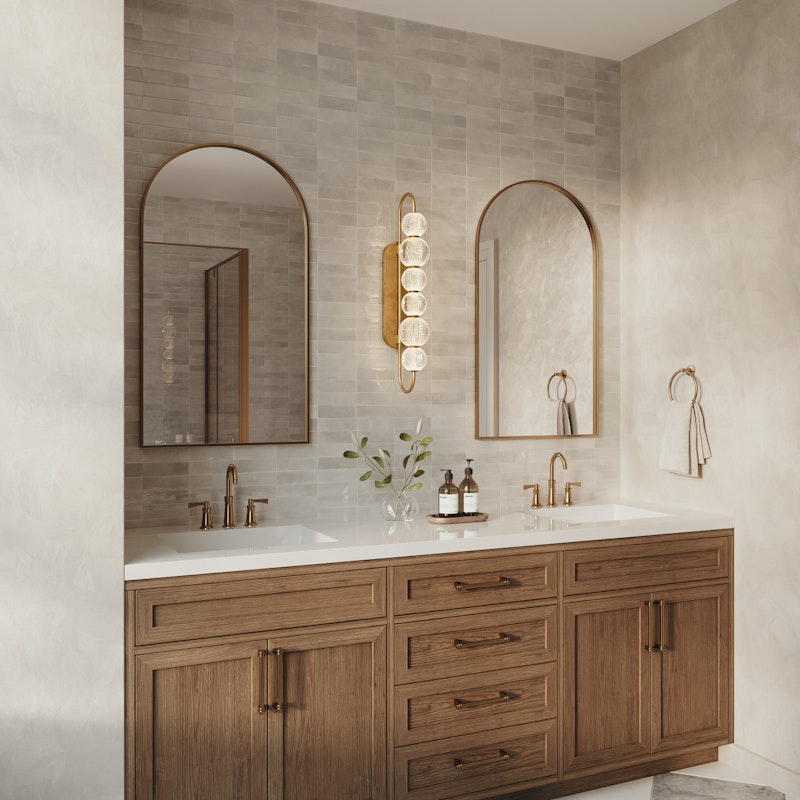
Alora Lighting NYC Studio Marni 29 Inch LED Wall Sconce
Make Your Ideas Come to Life
To help guide you on your next project, be sure to check out these how-tos:
- Complete Guide to Lighting Styles & Fixtures
- How to Layer Lighting in Open-Concept Living Spaces
- Chandelier Size Guide: How to Choose the Perfect Size for Any Room
Whether you need expert advice when purchasing ceiling lighting, home controls, or any other component of your lighting design or are seeking installation support, Capitol Lighting can assist you. Explore our online catalog to see the wide variety of lighting available. Contact our team of industry-trained, certified consultants or drop into one of our showrooms today.