Free Ground Shipping on Orders Over $49 Details & Exclusions Excludes Curb Side Delivery (LTL). Lower 48 United States Only. • NEW! Shop The Fall Lookbook

Apr 19, 2014
Things to Consider When Buying an Outdoor Ceiling Fan

TL;DR: Choose an outdoor ceiling fan based on where it will be installed, how exposed it is to weather, the size of the space, and the ceiling height. Use a damp-rated fan for covered patios and porches, and a wet-rated fan for areas exposed to rain, snow, or direct moisture. Measure your outdoor space before choosing the blade span, confirm proper clearance from the floor and walls, and select weather-resistant materials such as aluminum, stainless steel, or outdoor-rated finishes.
Having an outdoor ceiling fan on your front deck or patio is such an excellent way to keep yourself refreshed, especially on hot summer days. It’s also cheaper and more cost-efficient to use an outdoor ceiling fan to keep you cool, instead of using an air conditioner. When looking for an outdoor ceiling fan, there are a few factors to take into consideration. Here are some of the basic things that you need to ask yourself when choosing a ceiling fan for outside your home.
Are you installing the ceiling fan in a “damp” area or a “wet” area?
The Underwriters Laboratories or UL definition of “damp” is when the fan is under a roof or a porch and does not have direct exposure to water, such as rain or snow. Fans that have a UL rating of “wet” are sealed and can endure direct exposure to water. When installing a wet ceiling fan, however, you need to make sure that you use the required hardware to protect the ceiling fan’s internals and electrical connections from water.
| Rating | Best For | Exposure Level | Avoid Using In |
|---|---|---|---|
| Damp-rated | Covered patios, screened porches, garages, covered decks | Humidity and indirect moisture | Open patios, pergolas, areas with direct rain |
| Wet-rated | Open patios, pergolas, gazebos, exposed decks | Direct rain, snow, and heavy moisture | None outdoors, as long as the model is installed according to manufacturer instructions |
| Indoor-rated | Interior rooms only | Dry indoor conditions | Any outdoor or high-moisture location |
What type of mount should you use?
The right mount depends on your ceiling height and the shape of the ceiling.
Use a flush mount or hugger fan for lower ceilings where a downrod would place the blades too low. Use a standard downrod for most 8- to 9-foot ceilings. For taller or sloped ceilings, use a longer downrod so the fan hangs at the proper height for airflow and safety.
For outdoor installations, make sure the mounting hardware is also rated for outdoor use and compatible with the fan model.
What is the minimum fan clearance?
Before buying an outdoor ceiling fan, measure the ceiling height and the distance to nearby walls, beams, doors, and light fixtures. Proper clearance helps the fan move air efficiently and keeps the installation safe.
| Measurement | Recommended Clearance |
|---|---|
| Floor to fan blades | At least 7 feet / 84 inches |
| Blade tip to nearest wall or obstruction | At least 24 inches |
| Ceiling to fan blades | Follow manufacturer guidance; many installations need adequate space above the blades for airflow |
What size of ceiling fan should you buy?
The different sizes of ceiling fans are capable of cooling certain spaces, so you will have to make sure that you know the size of the area where you will be installing your outdoor ceiling fan. Here are the ceiling fan sizes with their corresponding room dimensions:
- A 36-inch ceiling fan will cool a room with an area of 144 square feet.
- A 42-inch ceiling fan will cool a room with an area of 225 square feet.
- A 52-inch ceiling fan will cool a room with an area of 325 square feet.
Pro Tip: For rectangular patios or outdoor dining areas, do not choose a fan based only on total square footage. Consider the shape of the space. A long, narrow patio may feel more comfortable with two evenly spaced fans instead of one large fan in the center.
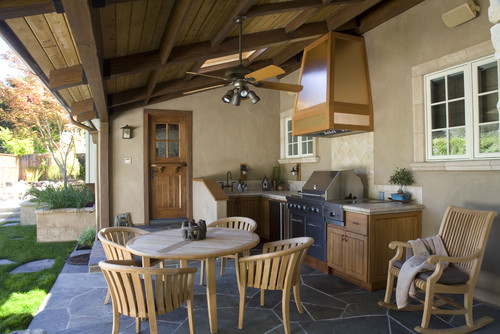
What is the best style for your space?
Your outdoor ceiling fan’s design should blend with the rest of your porch’s scheme. If you have a Victorian porch, you may want to consider a traditional type of ceiling fan. For a Tuscan outdoor dining area, a rustic type of outdoor fan will be perfect. Modern outdoor spaces will require modern style ceiling fans. The key here is to stay committed to the décor of your space so that your ceiling fan’s design does not clash with the rest of the furniture and fixtures of the area.
What color and material should you choose?
If you want your outdoor ceiling fan to blend with the ceiling, pick one that has a solid color which is identical to the color of your ceiling. If you intend to make a conversation piece of your ceiling fan, select a bold color or style that would stand out. Most ceiling fans are made of powder coated metal, which rusts over time if mounted outside. The best material for outdoor use would be aluminum or stainless steel. Ceiling fans made of stainless steel do require maintenance and regular cleaning so they don’t develop “tea stains” which may seem like rust. Aluminum ceiling fans on the other hand are trouble free.
By taking note of these basic requirements for outdoor ceiling fans, you are sure to get one that will not only look great in your patio or deck, you will also be making a great investment for a fixture that will perform for several years to come.