Free Ground Shipping on Orders Over $49 Details & Exclusions Excludes Curb Side Delivery (LTL). Lower 48 United States Only. • NEW! Shop The Fall Lookbook

Apr 10, 2026
Coastal Dining Room Chandeliers Guide

Donnybrook 33 Inch Chandelier by Currey and Company
Chandeliers are the most impressive and least subtle of lighting fixtures. They’re deliberately placed to draw the eye, elevate an existing aesthetic, and provide illumination levels ranging from ambient to bright, depending on your needs. But a chandelier never has to feel trapped by traditional norms. If your dining room has an existing ocean- or shoreline-inspired interior, you may be thinking: I need a chandelier that fits a coastal-themed dining room.
A coastal dining room chandelier isn’t as hard to find as you may think. In fact, many chandeliers lean into the airy, light touch that exemplifies the effortless elegance of the coastal vibe. Neutral tones, wave-inspired lines, and vintage-chic aesthetics can all complement your coastal dining room, especially when you carefully consider size, materials, and finish when selecting lighting.
Coastal Chandelier Styles to Consider
From coast to coast, seaside-style interiors are a burgeoning trend among design-forward homes. Light, airy aesthetics like the popular Coastal Scandifornia movement embrace the sandy shades of driftwood and secret beaches. At the same time, more conventional ocean-inspired themes add splashes of teal, deep blues, and frothy white, evoking thoughts of waves and tides.
A variety of light fixtures can fit right into any coastal color scheme. The first step in choosing light fixtures for coastal interiors is understanding what’s available. If conventional, cut-glass, or crystal drop chandeliers come to mind, it’s understandable that you may wonder how they can complement a more natural, beach-inspired look. You may be surprised to learn that chandeliers come in many styles, from bare, almost industrial frames to wave-inspired sweeping lines.
Here are just a few styles of coastal chandeliers you might consider for your dining room.
| Style | Size | Perfect for… |
| Wicker or rattan chandeliers | Various, often more compact than wide-span crystal chandeliers | Smaller dining rooms in golden, sandy tones, or where your ocean-inspired aesthetic needs a splash of a more neutral shade to tie it together. |
| Shell-inspired chandeliers | Small-to-medium fixtures, often with pendulous shells for gentle movement, or light shades crafted from pale or translucent imitation shells. | Small or midsize dining rooms: The light touch of seashell colors allows a chandelier to be bright and illuminating for smaller tables or spaces with nooks and crannies that are challenging to light up. Many shell-inspired fixtures also include reflective gold or copper elements that can add interest to a room while making it seem larger and brighter. |
| Distressed metal framework chandeliers | Medium to large, often wheel-shaped or angular. | Medium-to-large dining spaces with a light, airy feel that can handle some darker or more industrial fixtures. These chandeliers lean into the aesthetic of washed-up anchors, fishing boats, and abandoned piers, for intense nostalgia combined with crisp, clean lines or the perfect curve of a carefully crafted wheel of lights in iron or steel. |
| Waved inspired wood or fabric chandeliers | Various, larger fixtures may be more dramatic but will create unsubtle swathes of color. | Small-to-medium dining rooms with plenty of natural light just waiting to be elevated by a splash of natural wood or sandy tones. Wood tones for chandeliers or multi-light fixtures range from bamboo to mahogany, while fabrics can, of course, come in any color imaginable. |
| Lighthouse-style spotlight chandeliers | Small-to-medium groups of lights, sometimes directional, sometimes fixed. | Any dining space where you already have ambient light covered and need a brighter, central source of illumination to complete the look. Think vintage bronze or copper-lined lights that point out from the center of a central fixture. |
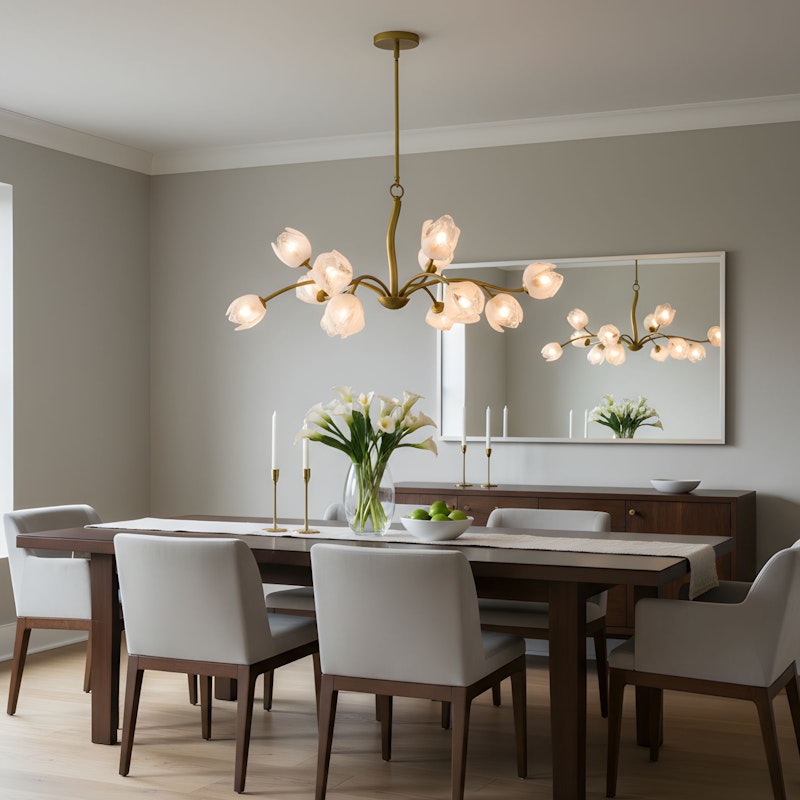
Walker 40 Inch Chandelier by Quoizel
How to Choose the Right Size Chandelier for Your Dining Table
Another aspect of choosing light fixtures for coastal interiors is considering the size of the chandelier versus the space in your dining area. In particular, ensuring the chandelier complements the dimensions of your dining table is a critical step.
If a chandelier is noticeably too large, it will make the dining table feel cramped and tight, and will distract diners while they’re trying to eat or converse. Too small, though, and the dining area will be dimly lit. A chandelier of insufficient size may also create unappealing pools of light and shadows that detract from the ambiance you’re trying to create.
For effective chandelier placement, consider fixtures that are 1.5 to 2.5 times the length of the dining table. So, for a six-foot dining table, look at coastal chandeliers with a diameter or length of 36-48 inches. Alternatively, two smaller chandeliers may provide the correct level of illumination if placed at equal intervals. You might find that this approach works well for a particularly long dining table.
Another consideration is how high you plan to hang your new coastal chandeliers. Any pendant lights for dining should be hung around 36 inches from the table surface to balance space with the right angle of illumination, ensuring the whole table is well-lit. If you have particularly high ceilings, consider a larger chandelier to fill the extra space. A bulky or ornate fixture can prevent a feeling of emptiness above your dining table.
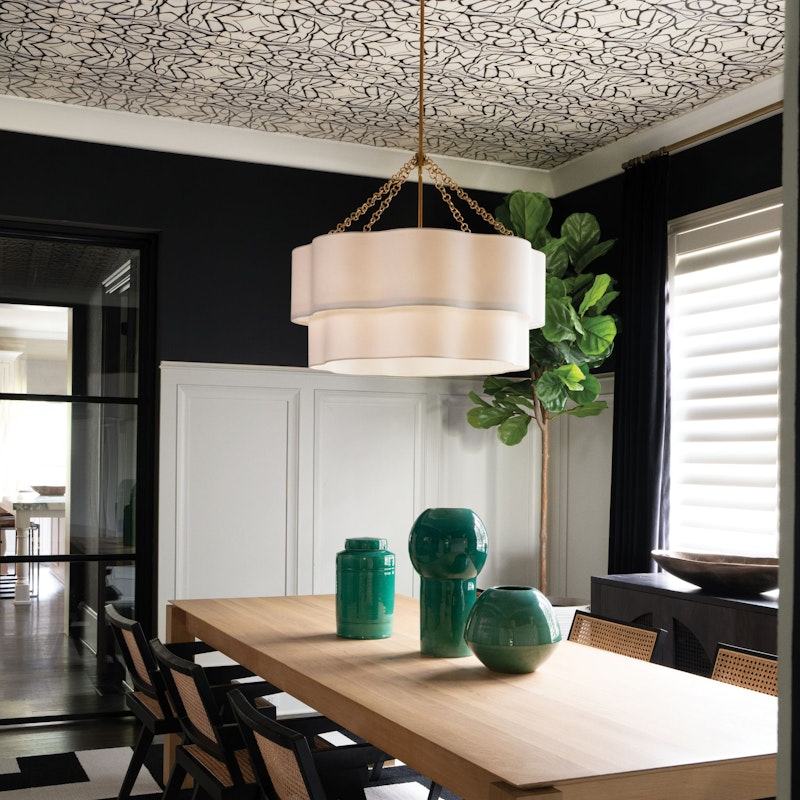
Gwen 32 Inch Chandelier by Hinkley Lighting
Best Materials and Finishes for Coastal Dining Lighting
Now you’ve got an idea of space and size, it’s time to think about which coastal materials will best complement your existing décor. One of the most wonderful aspects of the coastal aesthetic is that so many lighting finishes fit, from soft, beach-inspired fabrics and woods to metals and even stained glass.
Striking metal frames with bare bulbs can be the perfect match to more maximalist interiors. A dining room filled with ornaments, carved driftwood, and ocean paintings may all come together around a reclaimed piece of iron with lighthouse-inspired beacons surrounding it.
Copper, gold, and distressed bronze finishes are excellent for a vintage look echoing the nostalgia of a seafarer’s spyglass, an antique compass, or a ship’s barometer. Many brighter metal frames can also enhance a room’s energy by adding light and reflections.
Wood with visible natural grain is another popular choice, especially when used as a single, striking piece with multiple pendants or added as subtle details to avoid overpowering a minimalist space.
Blue and green colored or stained glass helps you add the colors of the sea to your dining space. Just remember that too much blue can make food seem discolored and unappealing. Blue should be an accent color here, not the main event.
Fabrics in golden or neutral tones are another consideration. Soft, sandy shades can create ambient light that brighter layers of illumination should complement. Gently shifting tassels offers another option that can create the movement associated with the tide.
Tips for Getting the Right Brightness and Placement
A single chandelier should always be centered above your dining table, while two or more should be equally spaced. For round dining tables, consider circular or elliptical chandeliers to suit their shape better.
Brightness can be controlled by investing in bulbs with different ratings or installing dimmer switches. Dimmers are popular in dining rooms because you can create a bright, chatty atmosphere for family gatherings or tone it down for a romantic tête-à-tête.
Remember, for sizing your coastal chandelier, you should:
- Carefully measure your dining table if you don’t already know its dimensions
- Divide the length by two and ensure your new chandelier is at least that length
- Ensure the length or diameter of the new chandelier is no more than 0.66 x the length of the table
- Where chandeliers are smaller than the minimum recommended length or diameter, consider multiple fixtures as a solution
- Check that you can hang your coastal chandelier at least 30-36 inches above the table
- If that’s not possible, consider smaller or flatter lighting options
- Conversely, for higher ceilings, look at larger coastal chandeliers
Don’t compromise your sense of style to get the right size. A lighting expert will be able to help you source something that matches all your specifications.
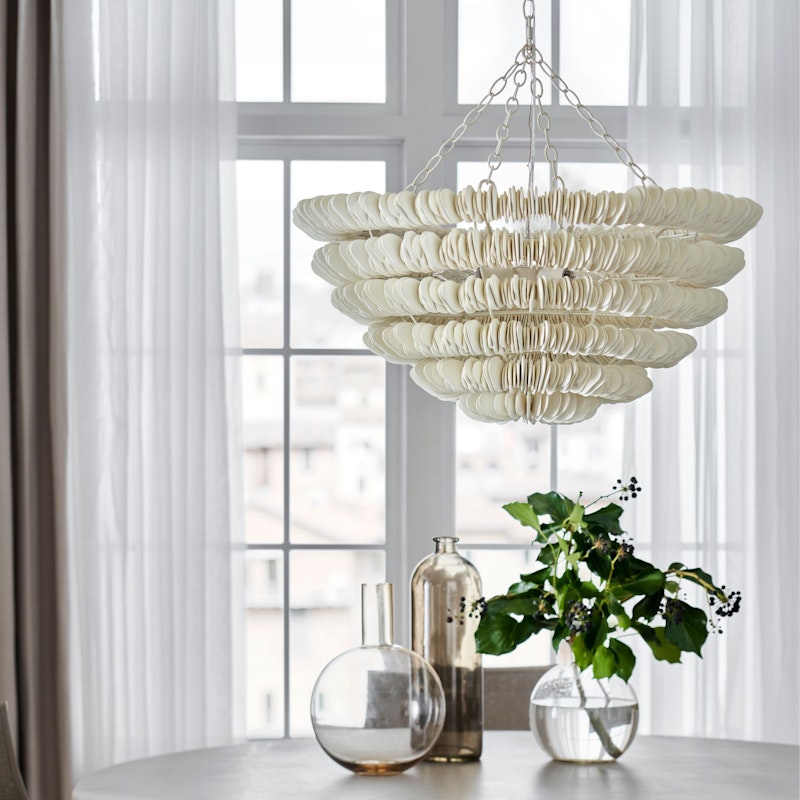
Hannah 30 Inch Chandelier by Palecek
Common Mistakes When Choosing Coastal Chandeliers
Avoid these common pitfalls:
- Relying on the chandelier as the only light source: A chandelier is a central source of light and, without additional lamps, spots, or recessed lights, can create deep shadows around the edge of the room. Layer light for effective illumination.
- Assuming one chandelier will light the whole table: Measure twice, buy once. If the length or diameter of your coastal chandelier isn’t at least half the length of your table, some diners will eat in shadow.
- Leaving too much space above the table: A small chandelier flush to a high ceiling will create a dull, empty space that does little to improve the aesthetic of your space.
For experienced, knowledgeable advice about any aspect of lighting, from the coastal aesthetic to brightness levels and fixture sizes, visit one of our stores or browse our online catalog. A member of the team will discuss the size of your dining room, the look you’re hoping to achieve, and how the new chandelier will fit in with your existing décor. Shoreline-inspired chandeliers can effortlessly elevate any room, so let us help you find your perfect finishing touch.
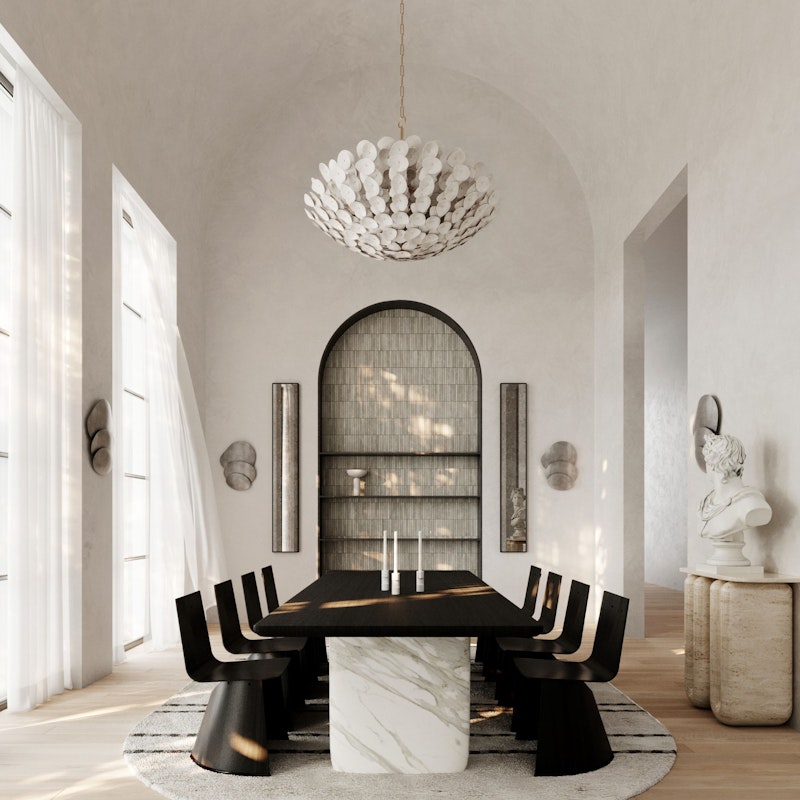
Aimi 48.5 Inch Chandelier by Corbett Lighting
FAQs
I need a chandelier that fits a coastal-themed dining room, but how can I ensure it’s the right size?
Consider your existing coastal design and look for a chandelier that matches, checking that its length is at least half that of your dining table. 1800lighting.com provides a chandelier sizing calculator as a guiding resource. Avoid buying one more than two-thirds the size of the table, as this will overpower your room.
Does a coastal dining room chandelier need to be finished in neutral colors?
No, you can opt for striking bare metal, blues, greens, and even bright white to echo the froth of wild waves. Let your sense of style guide you, all the while considering how the light and color will impact people eating and conversing around your dining table.