Free Ground Shipping on Orders Over $49 Details & Exclusions Excludes Curb Side Delivery (LTL). Lower 48 United States Only. • NEW! Shop The Fall Lookbook

Sep 17, 2021
Warm White vs. Cool White Kitchen Lighting: Which Is Best?

This subject may not be discussed very often, but the color temperature of your lighting can make a difference in the look and feel of the kitchen. But when you hear people discussing warm white vs. cool white, you may wonder what all the fuss is about. Aren’t they both white? And what is color temperature anyway?
To understand the difference in color temperatures and what that means for kitchen lighting, read on.
Key Takeaways
- For most residential kitchens, 3000K to 3500K offers a useful balance between a comfortable atmosphere and clear task lighting.
- 2700K to 3000K warm white works well for ambient and decorative lighting, especially in kitchens with warm wood tones, brass, cream, or traditional finishes.
- 3000K to 3500K works well over countertops and other task areas where clearer visibility is helpful.
- Cooler light can complement white, gray, black, stainless steel, and contemporary finishes, but a higher Kelvin rating does not mean the light is brighter.
- Kitchens often benefit from layered lighting rather than using one fixture or color temperature for every purpose.
- Check the Kelvin rating, rather than relying only on labels such as “warm white” or “cool white,” since terminology can vary by manufacturer.
What Is Color Temperature?
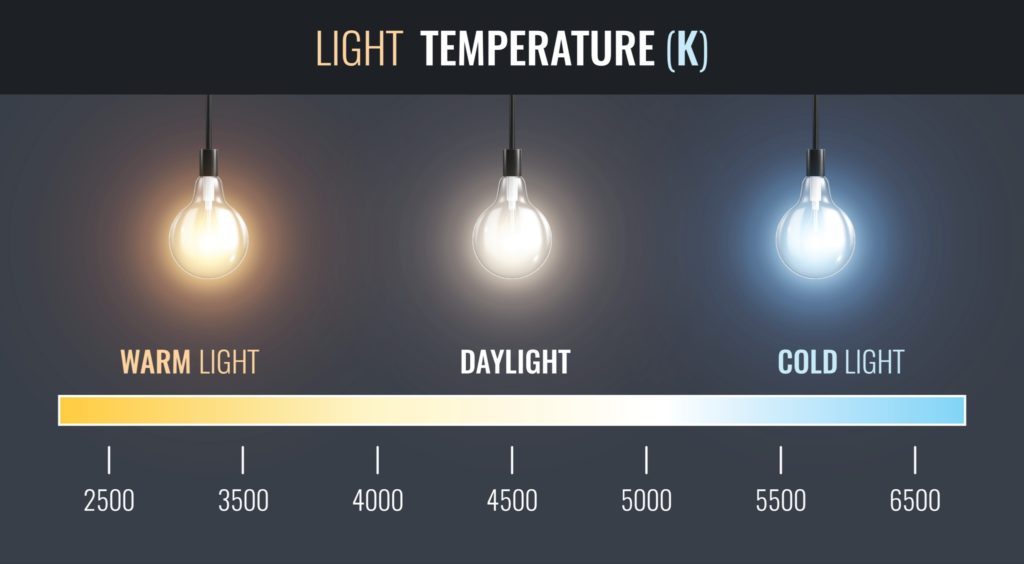
Color temperature describes how warm or cool a light appears and is measured in Kelvin (K). Lower Kelvin values produce warmer, more golden light, while higher values produce a cooler, whiter or blue-toned appearance.
Color temperature does not measure brightness. Kelvin measures the color of the light, while lumens measure how much light a bulb or fixture produces. This means a warm 3000K light can still be very bright, while a cooler light can have a lower lumen output.
| Color Temperature | Appearance | How It Can Work in a Kitchen |
|---|---|---|
| 2700K | Soft, warm white | Good for decorative fixtures, dining areas, and kitchens designed around warm finishes |
| 3000K | Warm white with a cleaner appearance | A versatile choice for general kitchen lighting |
| 3500K | Neutral white | Useful for task lighting while still feeling comfortable in a residential kitchen |
| 4000K | Crisp, neutral-to-cool white | Can suit task-focused areas or contemporary kitchens with cooler finishes |
| 5000K+ | Cool, daylight-like white | Usually better suited to highly task-focused or utility spaces than general residential kitchen lighting |
For most kitchens, start around 3000K to 3500K and adjust based on the room’s finishes, natural light, and how each lighting zone is used.
What Is the Best Color Temperature for Kitchen Lighting?
There isn’t one color temperature that works for every part of the kitchen. For most residential kitchens, 3000K is a versatile starting point, offering a warm but relatively crisp appearance. Task-focused areas such as countertops and food-preparation zones may benefit from 3000K to 3500K, while decorative pendants and dining areas can sit closer to 2700K to 3000K for a softer feel.
If the kitchen opens directly into a dining or living room, consider how the temperatures will look together. Large jumps between warm and cool lighting can make connected spaces feel visually disconnected.
Warm White Lighting for Kitchens
If the kitchen décor features natural materials such as tongue-and-groove ceilings, wood beams, hardwood floors, wood cabinets, or warm colors such as tans, browns, reds, and oranges, warmer white lighting can complement those finishes beautifully. Warm white typically falls around 2700K to 3000K, making it a natural fit for traditional and transitional kitchens where a softer atmosphere is preferred.

Visual Comfort and Co. Thomas O’Brien Goodman 18 Inch Large Pendant
Warm light from a pair of Visual Comfort and Co. Thomas O’Brien Goodman 18 Inch Large Pendants is complemented by Unilume 31 Inch LED Light Bar by Tech Lighting in keeping with this kitchen’s traditional style and wood beams on the ceiling.

Waldorf 23 Inch Large Pendant by Arteriors Home
The warm light shed by a pair of Waldorf 23 Inch Large Pendants by Arteriors Home livens up the bold colors in this kitchen. Bold orange, stately blue, and wool flooring play harmoniously under the vibrant illumination.
Cool White Lighting for Kitchens
Look at the colors in the kitchen: if they are mainly cool colors such as blacks, greys, greens, blues, and crisp whites, a cool light temperature will complement the décor. Modern-style kitchens that feature clean lines and minimalist design look best with this type of lighting.

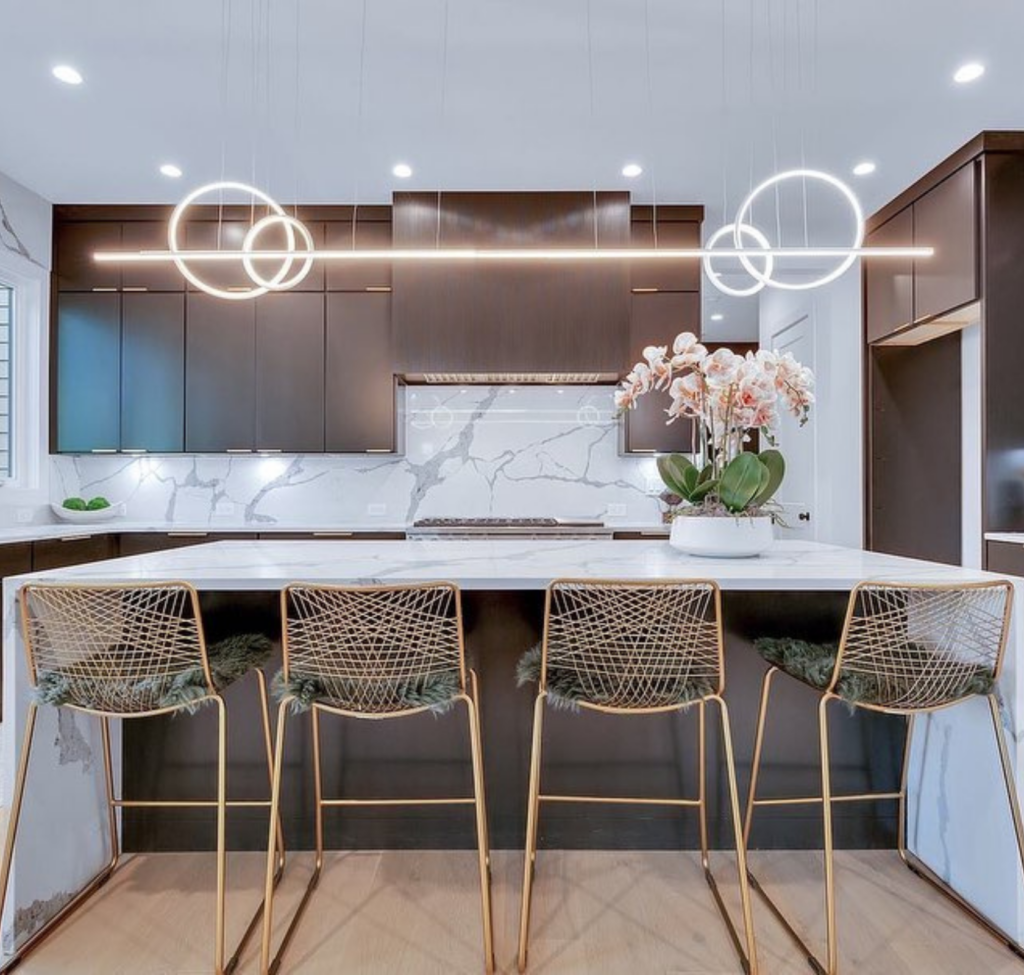
Tech Lighting Sean Lavin Dessau 48 Inch LED Linear Suspension Light
The clean lines of the Tech Lighting Sean Lavin Dessau 48 Inch LED Linear Suspension Light feature ultra-modern, sleek design houses a slim recessed panel that offers cool, white minimalist light in this kitchen. The Glyde 30 Inch LED Light Bar by Tech Lighting offers under-the-counter task lighting keeping the space cool and bright.
| Kitchen Colors & Materials | Temperature to Consider | Effect |
|---|---|---|
| Warm wood, cream, tan, brass, bronze | 2700K–3000K | Reinforces warmth and softness |
| Mixed warm and cool finishes | 3000K–3500K | Offers a balanced middle ground |
| White, gray, black, chrome, stainless steel | 3500K–4000K | Creates a cleaner, crisper appearance |
| Open kitchen connected to dining/living areas | 2700K–3000K ambient, slightly cooler task lighting | Helps maintain cohesion while supporting kitchen tasks |
Treat these ranges as starting points rather than strict rules. Paint, countertop materials, daylight, fixture shades, and personal preference can all affect how the same Kelvin temperature looks in a room.
Mixing & Matching for Your Kitchen
A kitchen does not need to use the same color temperature in every fixture. In fact, combining warmer ambient lighting with slightly crisper task lighting can help different areas of the kitchen serve their purpose more effectively.
When layering kitchen lighting, consider:
- Ambient lighting: Use recessed or ceiling lighting to provide comfortable general visibility throughout the room.
- Task lighting: Under-cabinet lights and fixtures over prep areas can use a slightly crisper white to improve visibility while cooking or cleaning.
- Decorative lighting: Pendants and chandeliers can lean warmer to create a softer atmosphere around islands, dining areas, or seating.
- Accent lighting: Cabinet, shelf, or architectural lighting can add depth without needing to match every task fixture exactly.
Pro Tip: If you mix color temperatures, keep the differences intentional. Fixtures positioned close together should generally feel coordinated, while separate lighting zones can support slightly different needs.

Hudson Valley Lighting Herkimer 17 Inch Large Pendant
The opal glass etched ball of the Hudson Valley Lighting Herkimer 17 Inch Large Pendant emits cool white light over the island, while under-cabinet lighting casts a soft glow that warms up the room. The light presents a unique update of Danish mid-century modern lighting principles with a contrast of texture, color, and width.

Calypso Chandeliers by Crystorama
This large kitchen can handle a lot of light, with a pair of Calypso 20 Inch 6 Light Chandeliers and a Calypso 30 Inch 6 Light Chandelier providing warm lighting along with a full measure of glam. Cool white under cabinet lighting and recessed ceiling lights offer focused illumination where needed.

Haskell 34 Inch 8 Light Chandelier by Arteriors Home
The warm light shed by the Haskell 34 Inch 8 Light Chandelier by Arteriors Home enhances the ambiance of this kitchen. The white lighting in workspaces supports the functionality of a multi-use area.

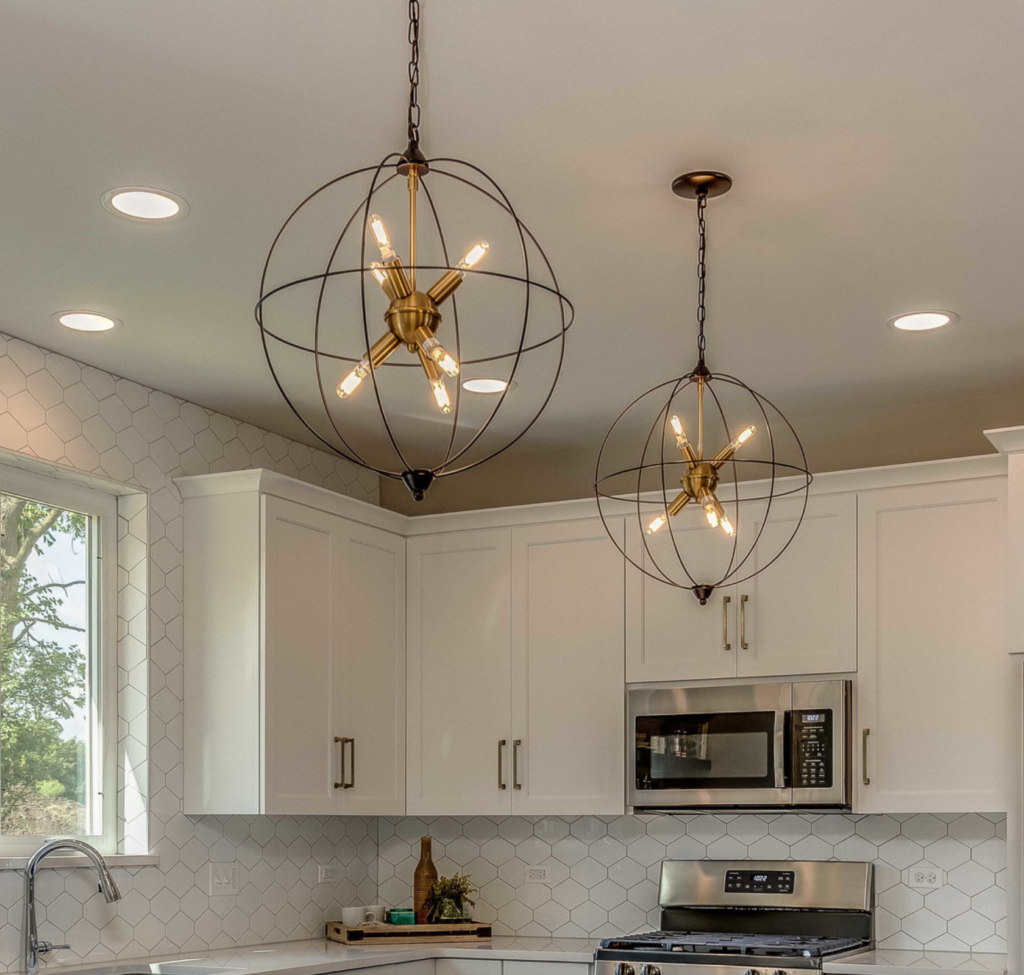
Glendale 20 Inch Cage Pendant by Hudson Valley Lighting
The Sputnik-inspired lantern style of the Glendale 20 Inch Cage Pendant by Hudson Valley Lighting offers warm ambient light that plays well with the wood flooring and natural shades. Recessed ceiling lights subtly highlight the sleek black hood, shedding crisp light where needed in this kitchen.
What If You Can’t Decide Between Warm and Cool White?
Color-selectable and tunable white LEDs can offer more flexibility in a multipurpose kitchen. Depending on the fixture, you may be able to choose between several Kelvin settings or adjust the light from a crisper tone for food prep to a warmer tone for dining and entertaining.
If you’re still unsure whether warm white or cool white lighting is right for your kitchen, our lighting specialists can help you compare color temperatures, fixture styles, and lighting options based on your space, finishes, and everyday needs. You can also visit a Capitol Lighting showroom to see different lighting temperatures and fixtures in person and get personalized guidance for your kitchen.